







It could be a challenge to move troublesome and cumbersome drums whilst navigating around the warehouse if you do not have the right equipment. Safety is important because drums contain liquids, chemical, oil or other materials. If you use a proper lifting attachment, it can reduce your material handling easy, and the will make your warehouse safer.
Depending on the task, you may also use attachments for handling drums and pallets. Here are five solutions that are worth looking into.
- Drum Lifters
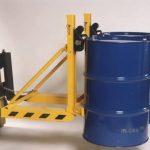
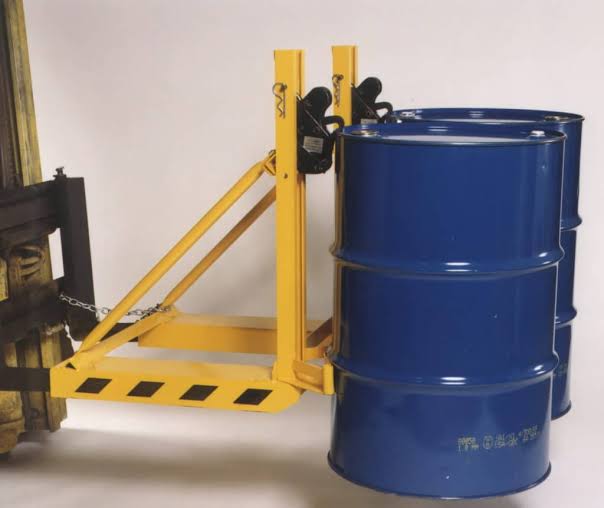
The drum lifter has an ergonomic design that easily lifts and hold different types of drums using a forklift or similar lifting device. It can be plastic − or steel drums based on its design.
This allows operators to move drums without picking them up themselves. These are convenient when drums have to be bundled, positioned, or stowed away on a pallet.
Certification of attachment always verifies rated capacity which should match to the drum being handled.
- Drum Trolleys
A drum trolley is ideal for transporting drums across short distances without the need to use a forklift.
This could be done on many models, having an operator able to control the pitch (aka tilt) and direction a drum moved. This is valuable in warehouses where drums are often transferred between storage and work sites.
If they are not full then examine the trolley, which must be inspected before use for its capacity, as well as the wheels (for smooth movement), and the condition of their drum retention system.
- Drum Rotators
Operators need to be able to lift and rotate drums in a controlled manner, drum rotators let them do that. That proves useful when drums need to be drained, relocated, or filled.
Some models even allow the driver to rotate the drum from their seat in a forklift. That can minimise the need for workers to physically handle heavy cargo containers.
Rotators must only be used with compatible drums and within the individual rated operating limits of hardware.
- Drum Grab Attachments
Drum grabs are used to safely and securely grab drums to lift them and transport them around. This is highly useful in warehouse cases where drums should be moved regularly.
Before every use, the mechanism that enables gripping should be checked. Ensure it engages properly and that the drum is at a latitude desired by the manufacturer.
Just because the drum looks like it fits does not mean a grab will work!
- Drum Handling Fork Attachments
Fork-mounted drum handling attachments can give you a flexible solution if your warehouse/operation already has forklifts.
The operators can use these attachments with the existing forklift to pick up the drums and transport them. There are some designs that only handle a single drum, whereas others accommodate multiple drums.
When working with a drum lifter or fork-mounted drum handler, the capping of the forklift and weight should always be matched to the load.
How to Select the Right Attachment?
Your choice of the best attachment is based on the type of drums, weight, and material you need to handle.
Think about:
- Drum size and material
- Maximum load weight
- Required lifting height
- Frequency of use
- Forklift compatibility
- Storage and working conditions
- Operator training requirements
A drum trolley is the next best option if you move shorter distances. If you are lifting pallets or something that high, a forklift-mounted solution may be better suited.
Safety Comes First
Inspect attachments before each shift. Check for cracks, defective parts, deformed wheels, loose fasteners, or any other signs of fatigue.
Operator not exceeding capacity rated by manufacturer. Specialist handling equipment should not be used by operators until they have gone through their workplace procedures, and have received the proper training.
Final Thoughts
Warehouse tasks conducted with proper drum handling equipment can be safer and more efficient. Drum lifters, trolleys, rotators, grabs, and fork-mounted attachments are used for various purposes.
Choose equipment based on the task you are doing, not just their appearance or price. Warehouses utilise equipment which helps in memory management, keeping fewer workers moving the right equipment over heavy drums with less human involvement.